Seaweed Diary (2024-2025)
Gijang, Busan, South Korea

‘Crisis of Seaweed’
Once served at the royal table of the Joseon Dynasty kings, seaweed from Gijang, Busan was a treasured regional delicacy. But in today’s warming seas, the seaweed has begun to dissolve.
Climate change is no longer simply about weather—it has become a question of whether we can continue to live and sustain ourselves on this land.
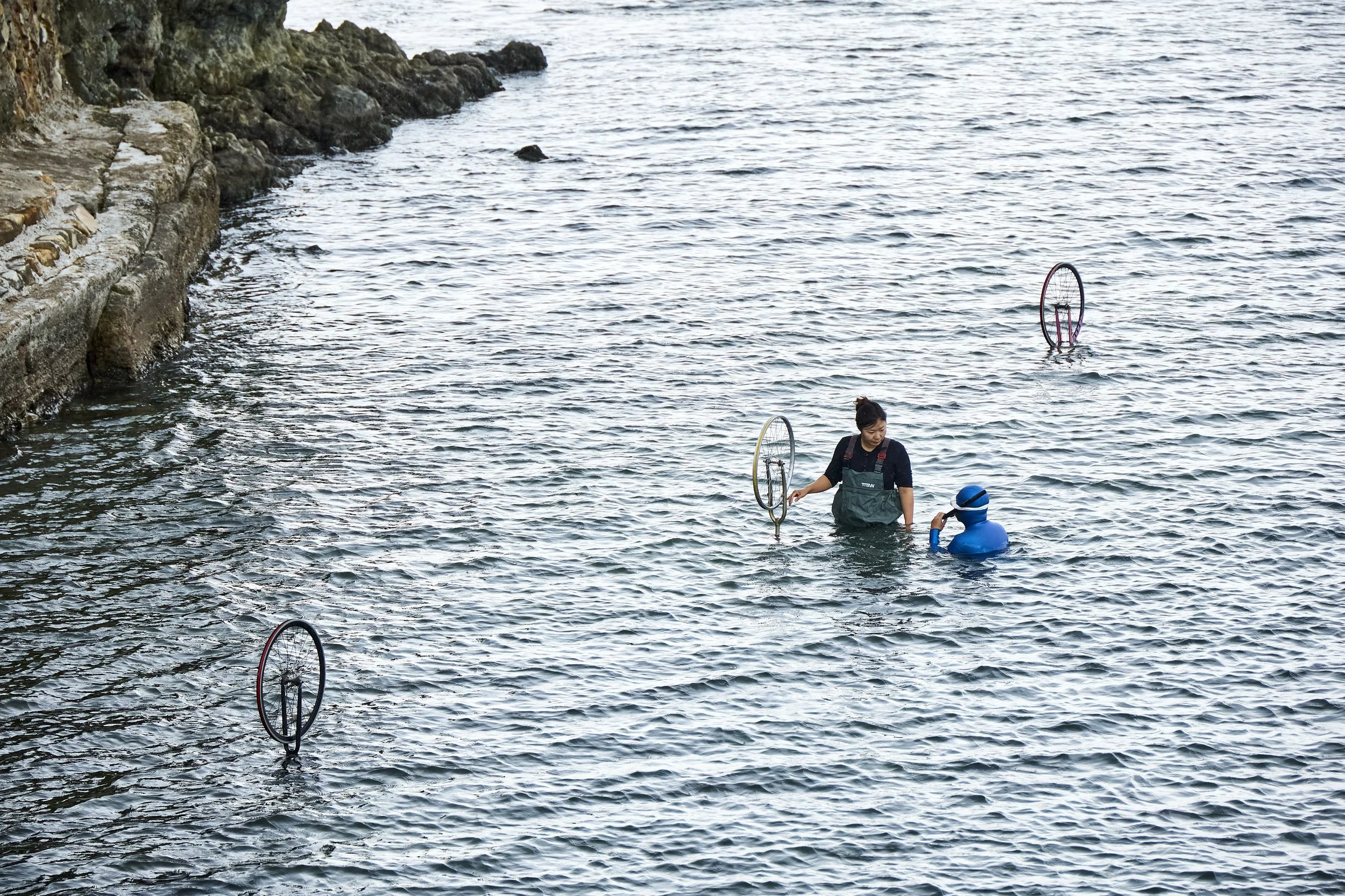
Seaweed Diary traces the unfolding crisis of marine ecosystems under climate change—where a once-abundant material begins to disappear.
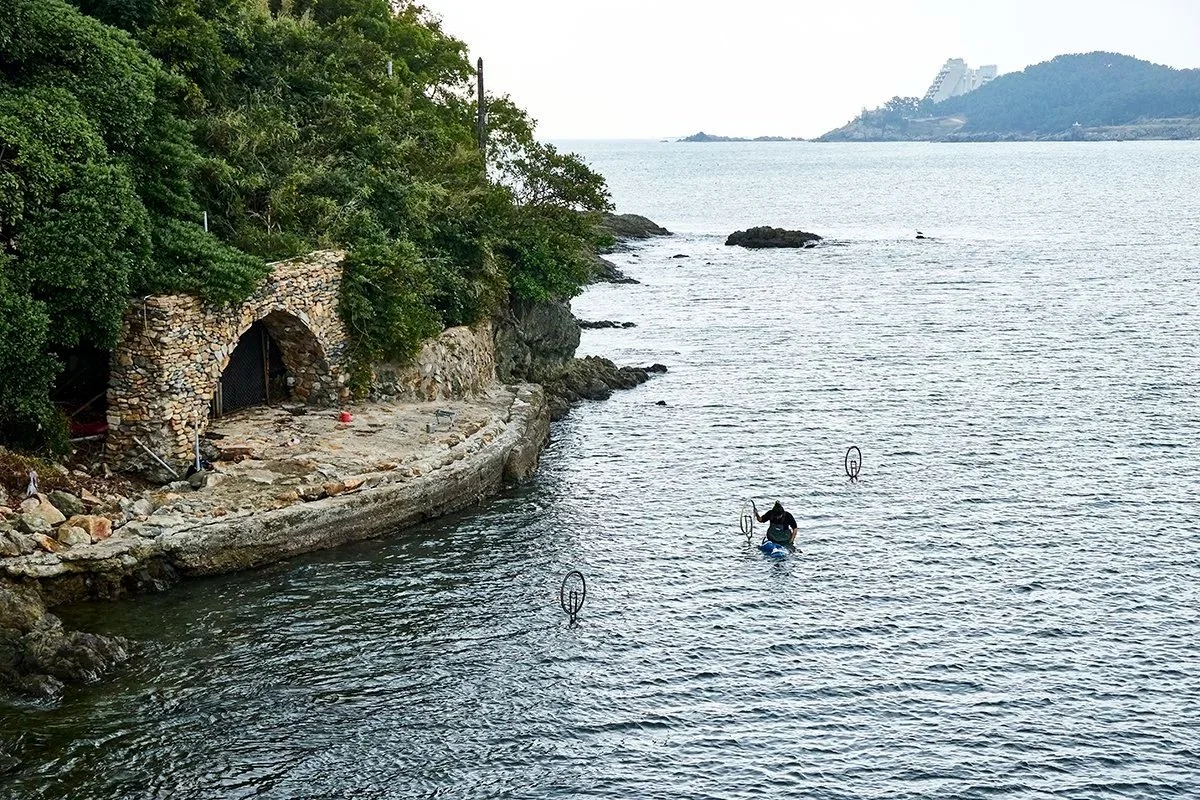
Rooted in the cultivation of “Gijang-type seaweed” in the waters of Gijang, the project moves between observation, adaptation, and response. In collaboration with Eco Action Forest, seaweed becomes both subject and material—grown, studied, and translated into artistic form.
Across painting (Kate Bae), media work (Gyubin Sin), and text (Adrian Dongmin Choi), the project unfolds as a distributed field of practices. These works do not represent the ocean directly, but emerge from its changing conditions—carrying its textures, absences, and temporal shifts.
Through exhibitions and public programs, Seaweed Diary extends beyond the studio, engaging broader audiences and forming connections across local and international contexts. The project positions art as both a site of perception and a mode of response—where ecological change is not only understood, but felt.
Presented at the Seoul Design Festival and the UN Climate Summit COP29 in Baku, the work brings the urgency of marine transformation into public space.
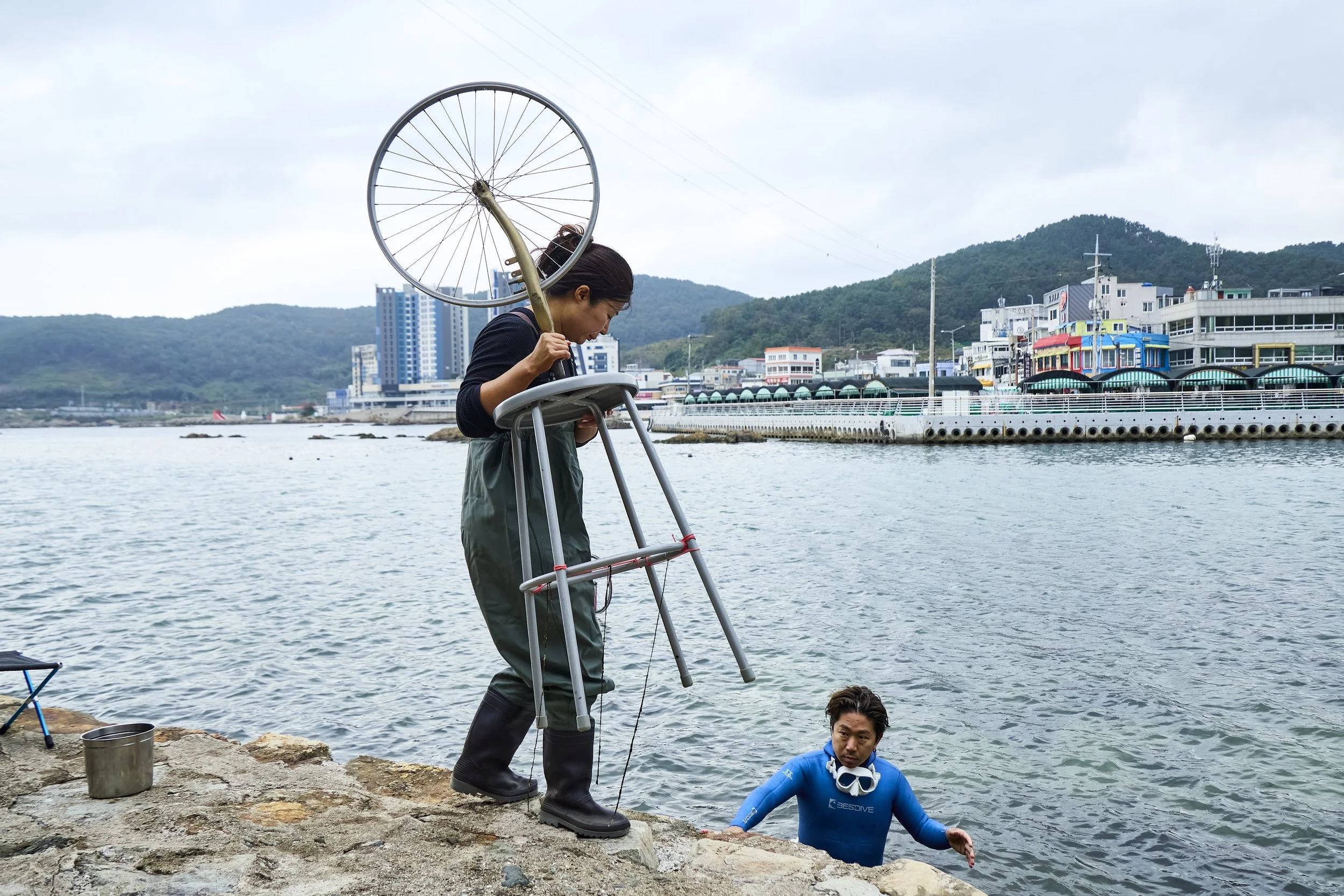
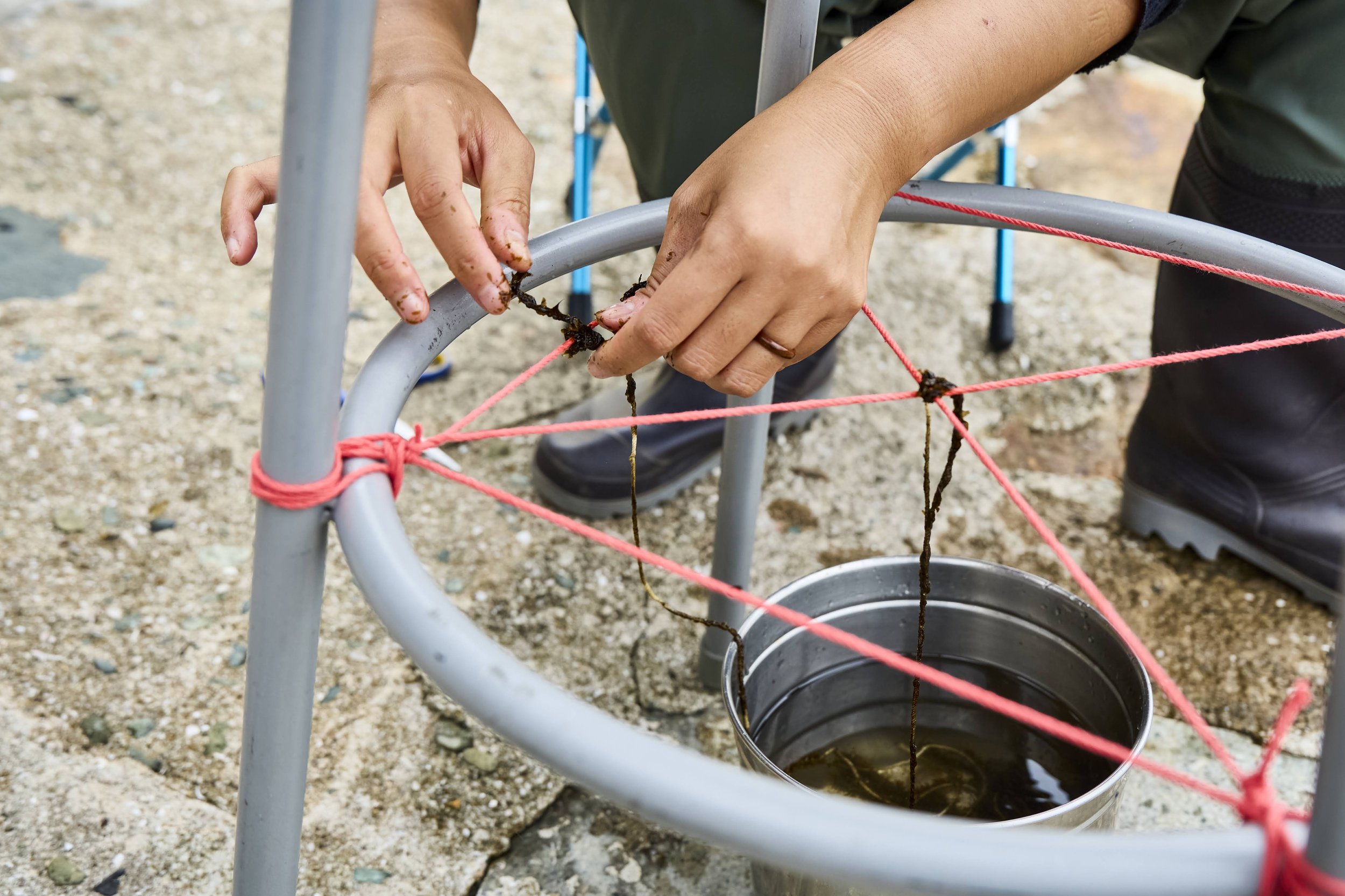
Project development (2024 05.01-10.31)




seoul design festival, south korea (2024 11.13 -11.17)


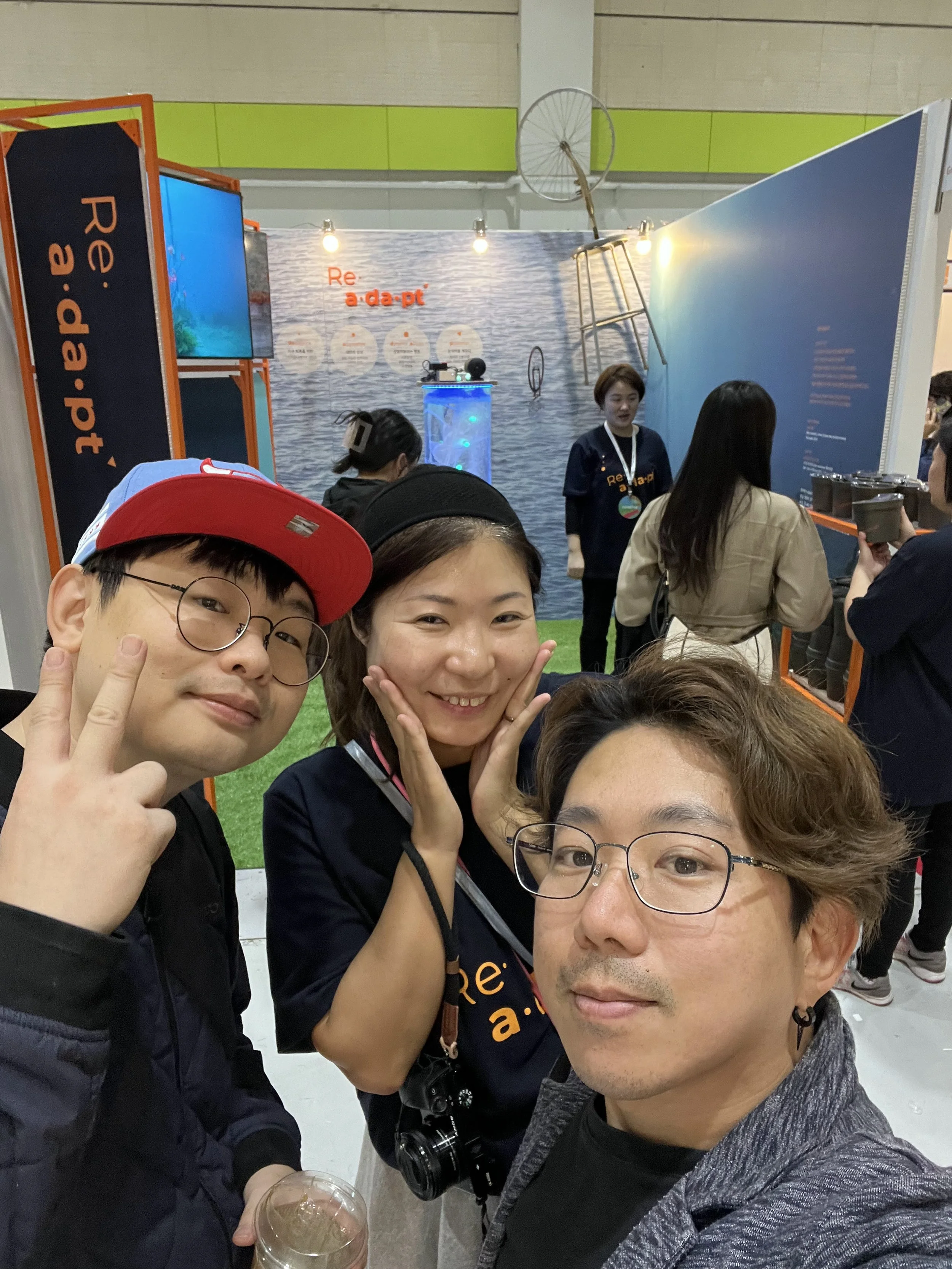
presentation at the COP29 at BAku, AZERBAIJAN (2024 11.11-11.22)



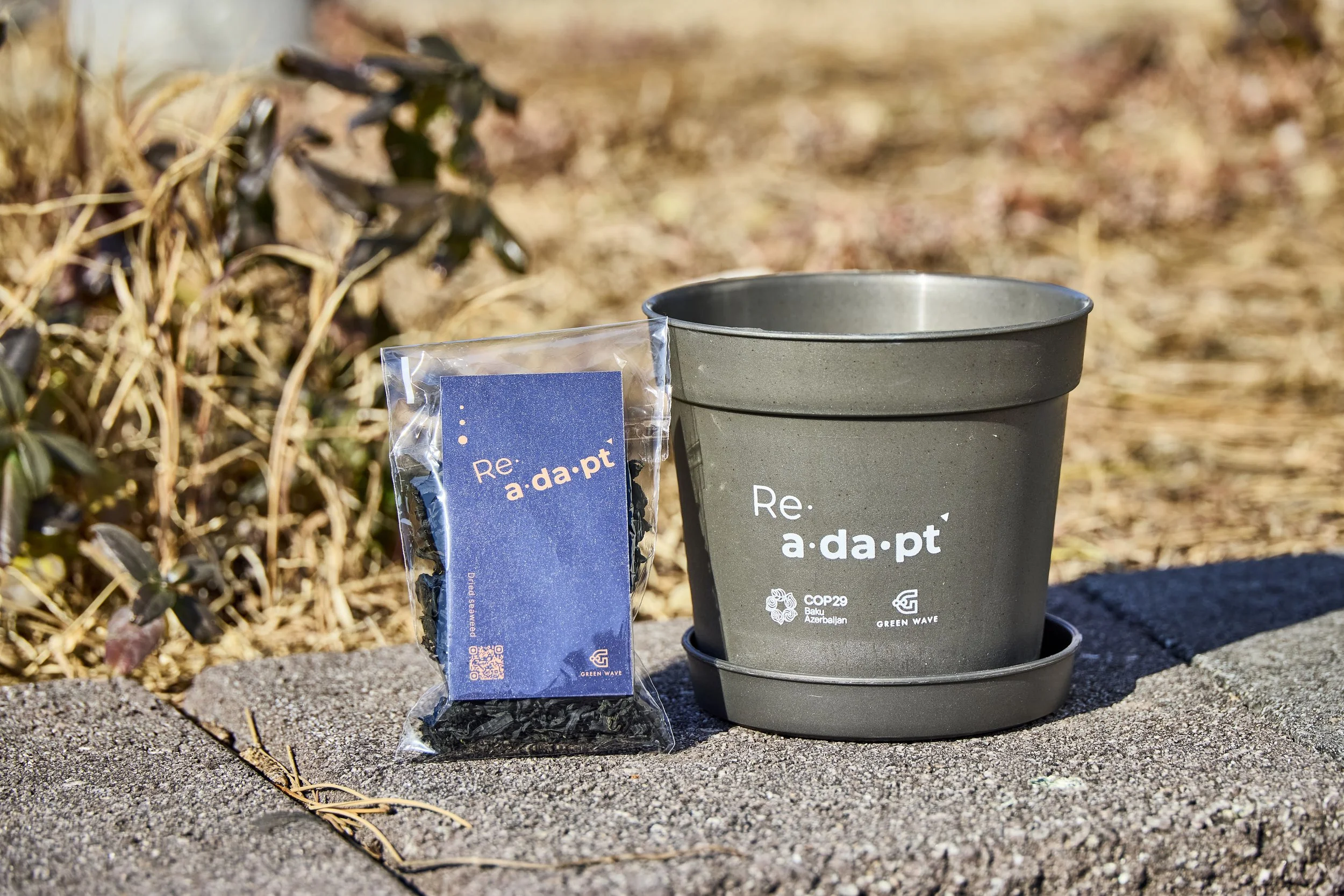
pop-up exhibition, gijang, South korea (2024 12.27-12.29)
Ode to Green
Kate Bae
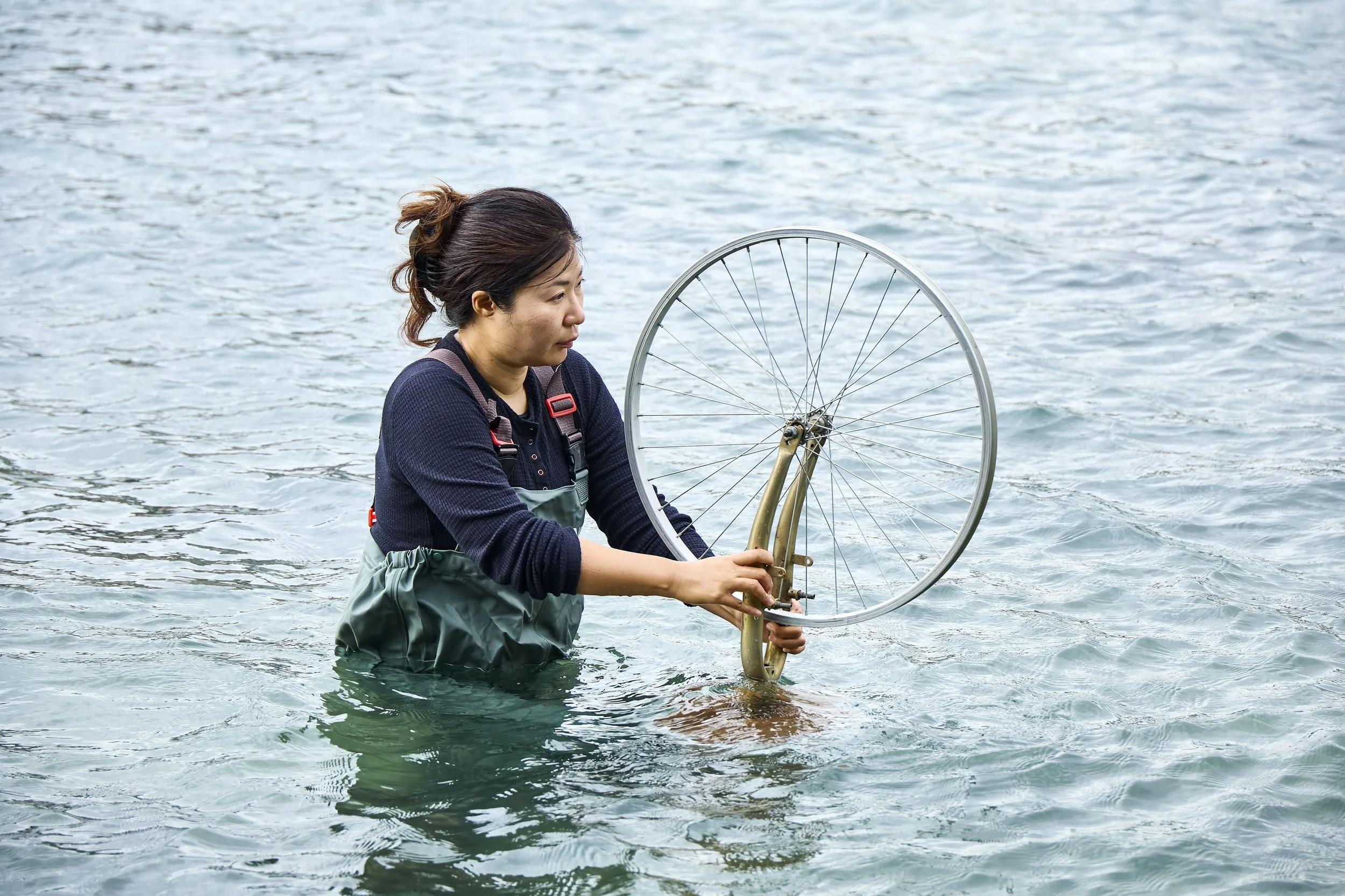
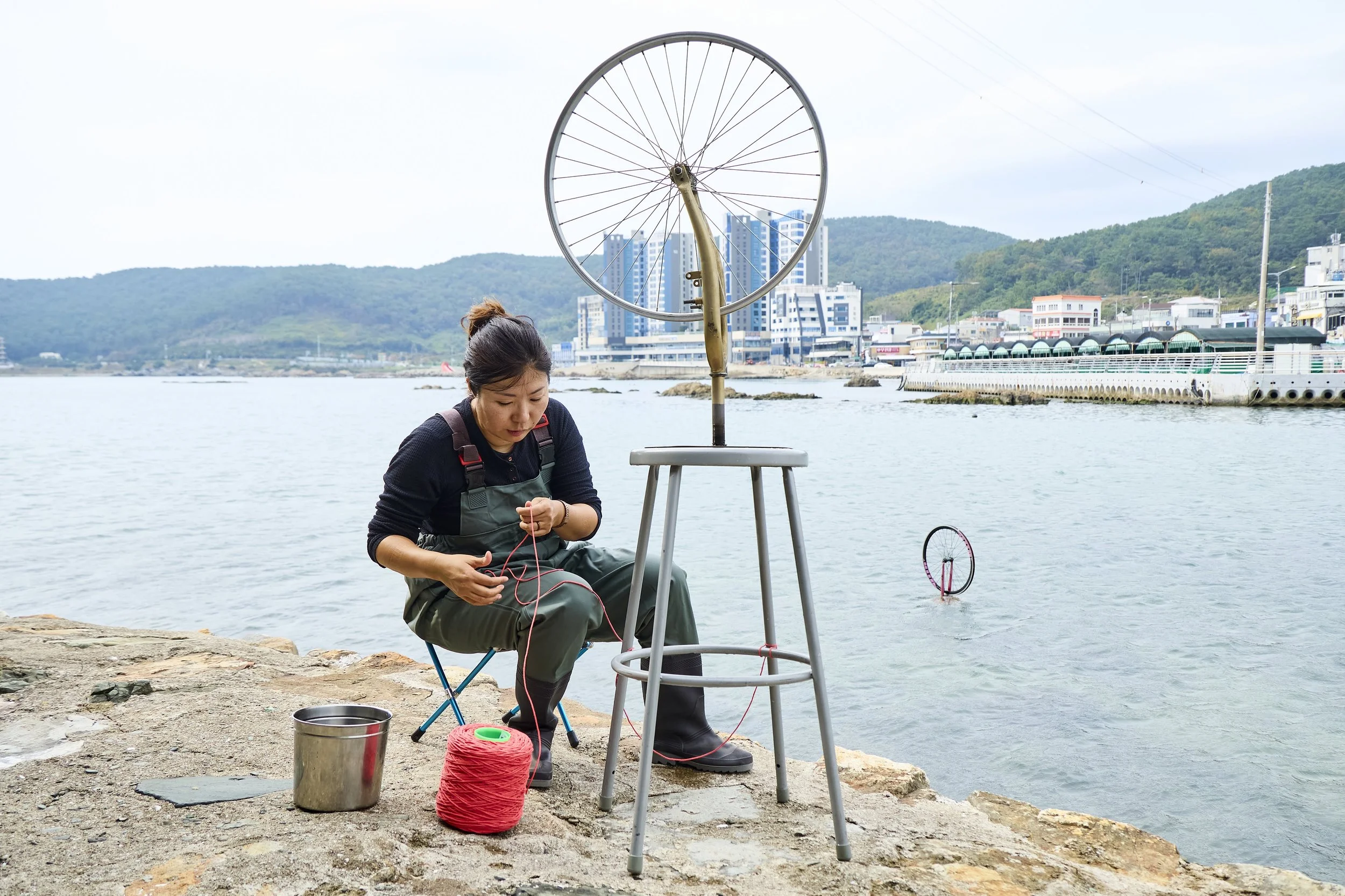
Baby Seaweeds, threads, chairs, and bicycle wheels, 162.2 × 130.3 cm (three parts), 2024
Acrylic on canvas, variable dimensions, 2024 (smaller works)
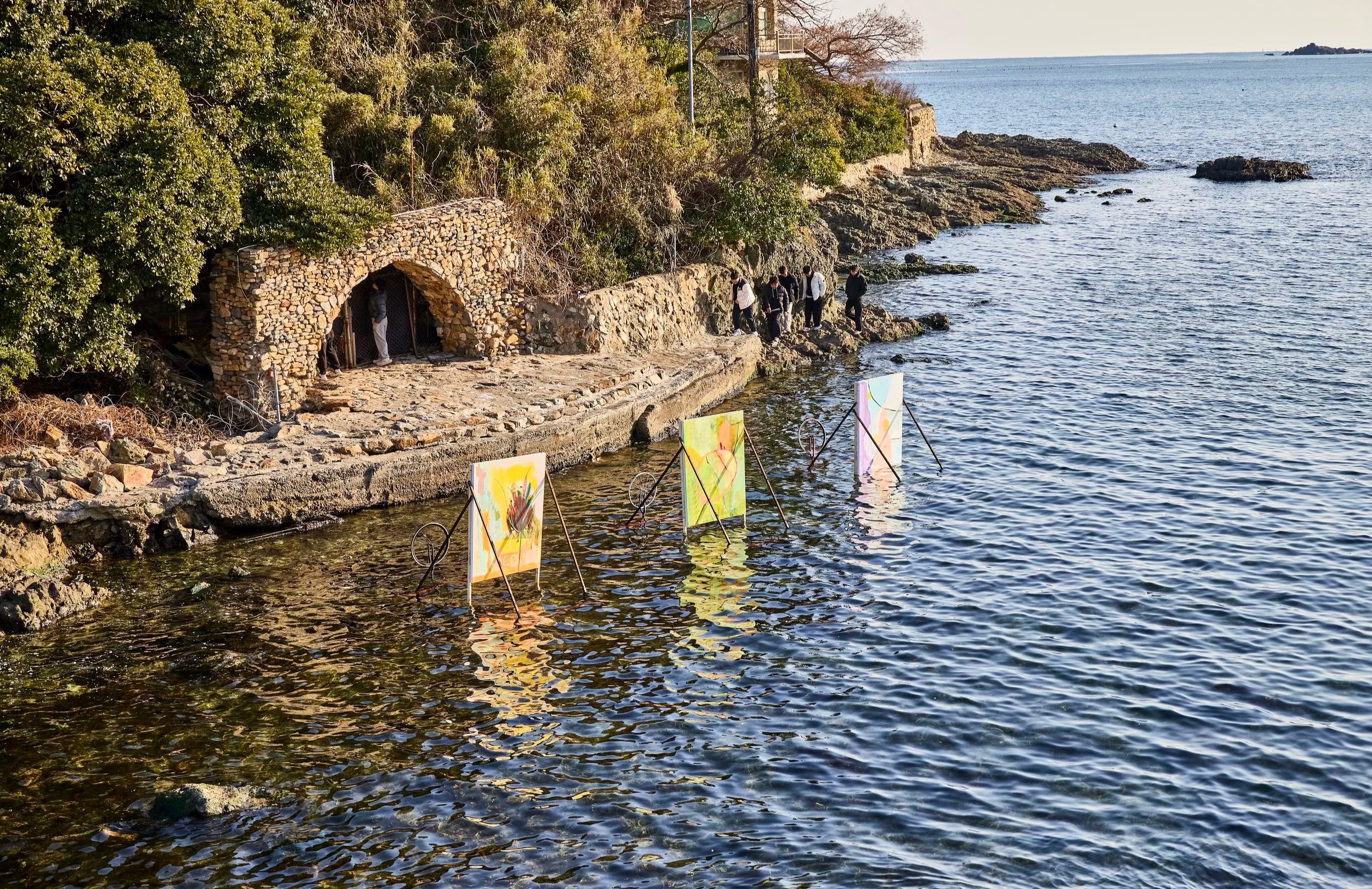


These paintings explore the impact of climate change on seaweed, a material deeply embedded in Korean cultural and ecological life. Inspired by the tradition of consuming seaweed soup after childbirth, the series reflects on cycles of birth, loss, and regeneration. Through the changing condition of seaweed, the work considers how environmental transformation is intimately tied to the continuity of life.
Rather than illustrating crisis directly, the paintings attend to subtle shifts—material, sensory, and temporal—through which ecological change becomes perceptible.
As a painter, I approach the act of painting as a form of care. The gesture of the brush, its repetition and attention, parallels the cultivation of seaweed—both sustained through time, labor, and responsiveness. Through this correspondence, the work reflects on how ecological conditions are held within processes of making.


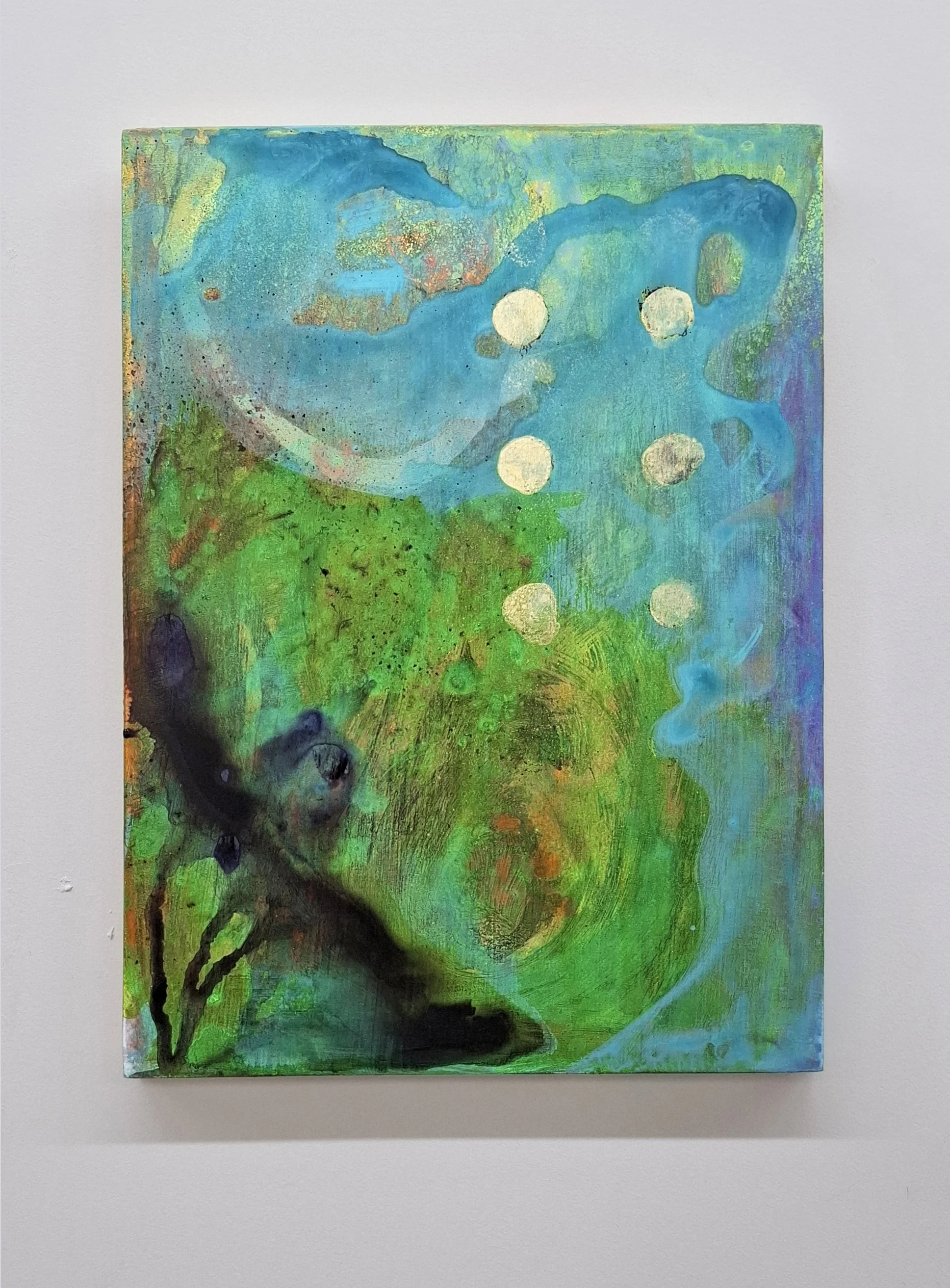


My Giyeok 나의기역
Secret (Peacock) Base – Gyubin Sin
High water tank, resin print, LED, microboard, steel structure, 30 × 30 × 170 cm, 2024
This piece, 'My Memory,' explores the trajectory of my life through the metaphor of seaweed. 3D-printed translucent seaweed, inspired by the fluid motion of seaweed soup, symbolizes the fragmented nature of recollection. This organic, flowing form mirrors the ebb and flow of existence, just as the movement of seaweed suggests a journey of life that continues along with the flow of time. This artwork prompts a reflection on one's past, encouraging a reinterpretation of the meaning of accumulated experiences and memories.


Seaweed diary 미역얘기
Eco Action Forest – Adrian Dongmin Choi
Text cards, pen and watercolor on handmade seaweed paper, 13.5 × 18.5 cm, 2024
A diary of seaweed observation written on paper made from seaweed, collapsing the distinction between material and subject, Seaweed Diary draws on memories of seaweed, family, and the sea. Through fragments of recollection, it traces a quiet sense of affection and loss as seaweed begins to disappear in warming waters.


Organized and presented by: Eco Action Forest
Collaborators: Kate Bae, Gyubin Sin, Dongmin Choi, Kyungho Hwang, Yuri Choi, Miri, Juchan Kim, Jimin Lee (EOEO Studio), Taekgeun Ahn (Gijang Haenyeo), Yeonhwari Sinam Fishing Village Association, Gijang Fisheries Resources Research Center, No. 0 Jeonghae House
This project was supported by the 2024 Busan Metropolitan City and Busan Cultural Foundation Art Support Program.